Casino payments in Belgium: the euro path from deposit to withdrawal
A SEPA Instant transfer credits in under 10 seconds, a standard SEPA transfer by the end of the next business day, and a Bancontact payment is authorised within seconds. Before a first payout, identity and ownership of the payment method are checked, and the bank statement records each movement in euros.
Bancontact and debit cards
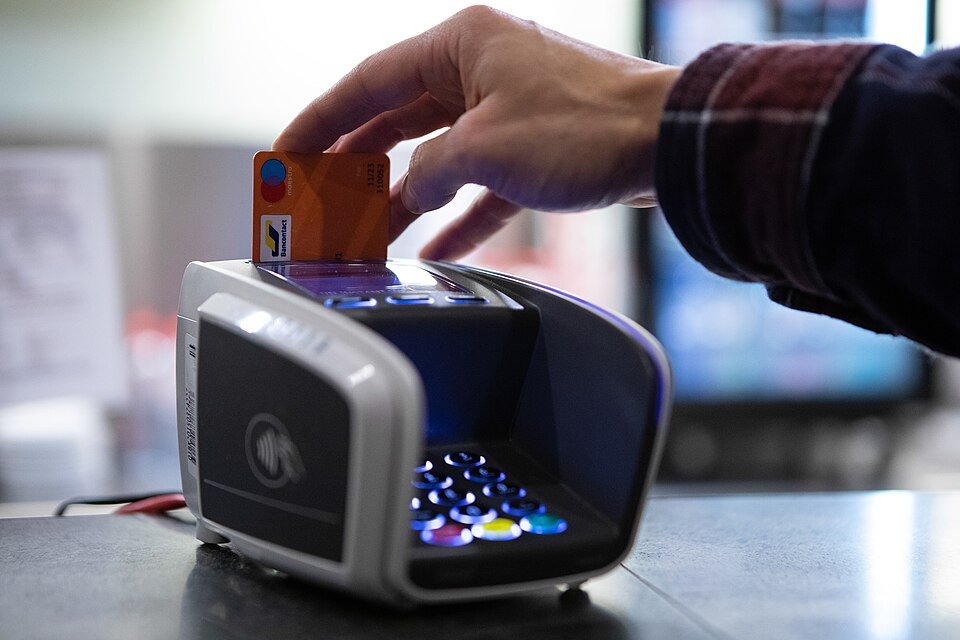
Bancontact is the Belgian debit card scheme, and for most players it is the shortest route from a current account to a casino balance. The player picks Bancontact at the cashier, is redirected to the bank’s authentication step and confirms the payment in the bank app or with the card and reader, depending on the bank. Under the EU Payment Services Directive (PSD2), an online card payment requires strong customer authentication, which means two independent factors.
Once confirmed, the amount is debited from the current account in euros and the balance on the platform is credited straight away. The card’s own limits still apply: Belgian banks set a daily or weekly ceiling for online payments, and the player can usually raise or lower it in the banking app.
Operators are licensed under the Gaming Commission’s framework described on the home page; the payment itself runs under banking rules, which is why the same authentication appears for a casino deposit and for a train ticket.
Credit cards and the Belgian rules around them
A credit card does not draw on the current account at the moment of payment. The deposit is a borrowed amount, booked on the card account and debited from the current account on the settlement date shown on the card statement. Consumer credit in Belgium is governed by Book VII of the Code of Economic Law, and a card line is a credit facility within that framework.
Card agreements can treat gambling differently from ordinary purchases. Gambling transactions carry their own merchant category code, 7995, and some issuers classify them as cash-like, which brings a cash-advance charge and interest from the day of the transaction. The fee schedule of the card contract states the rule; the cashier of a licensed operator lists the card types it accepts.
Interchange on consumer credit cards is capped at 0.3% by Regulation (EU) 2015/751, against 0.2% for debit cards.
Bank transfer: slow, traceable, predictable
A bank transfer is made from the home banking application of the player, to the operator’s account, with a reference given at the cashier. Two SEPA schemes exist. The standard SEPA credit transfer must be credited by the end of the next business day (D+1) and is not processed on weekends or bank holidays. SEPA Instant credits in under 10 seconds, at any hour, up to a scheme ceiling of €100,000 per transfer; each bank sets its own, lower, limit.
Regulation (EU) 2024/886 requires euro-area banks to offer sending of instant transfers at a price no higher than a standard transfer. For the player, a transfer is the method that leaves the cleanest trace: one outgoing line, one reference, one execution date.
E-wallets and prepaid vouchers
An e-wallet adds a link to the chain. Money goes from the bank account to the wallet, then from the wallet to the operator, so two entries exist on two different records: the bank statement shows the transfer or card payment that funded the wallet, the wallet history shows the payment to the operator. The speed of a deposit therefore depends on how the wallet was funded, and wallet providers publish their own fee schedules.
A prepaid voucher is bought with cash or by card at a retail point or online, and its code is entered at the cashier. The deposit is immediate and the bank statement shows only the purchase of the voucher. A voucher cannot receive a payout, so a withdrawal goes to a bank account or a wallet instead, and that is the point where identity and ownership checks apply.
Timing and fees in euros by method
Fees come from three places: the player’s bank, the wallet or card issuer, and the operator. Their amounts in euros are written in the bank tariff and in the payment terms of the operator, and they differ from one provider to the next. Under PSD2, a merchant cannot add a surcharge on consumer cards covered by the interchange cap or on SEPA transfers.
| Method | Deposit credited | Payout route | Where fees come from |
|---|---|---|---|
| Bancontact, debit card | Within seconds of bank authentication | Defined in the operator’s terms | Bank tariff; no surcharge by the merchant |
| Credit card | Within seconds; debited on the settlement date | Defined in the operator’s terms | Card contract, possible cash-advance charge |
| SEPA Instant | Under 10 s | Same speed once the operator releases the payout | Bank tariff, at most the price of a standard transfer |
| Standard SEPA | By the end of the next business day | D+1 after the operator releases the payout | Bank tariff |
| E-wallet | Depends on how the wallet is funded | To the wallet, then to the bank under wallet terms | Wallet provider’s schedule |
| Prepaid voucher | Immediate once the code is entered | Not possible; another method is required | Purchase price of the voucher |
Withdrawal rules: same-method return and first-payout checks
Operators commonly return winnings through the method used for the deposit, wherever that method accepts payouts. The rule comes from anti-money-laundering practice: money should leave along the path it entered. Casinos and online operators are obliged entities under the Belgian law of 18 September 2017, with an identification threshold of €2,000 for gambling transactions under EU rules, and they keep identification data and transaction records for 10 years.
- Withdrawal requestThe player requests an amount in euros from the cashier; the platform shows it as pending.
- Internal reviewThe operator checks the request against the account history. Its terms state the review period.
- Document checkThe first payout usually triggers a request for the identity document, a proof of address and a proof that the card, account or wallet belongs to the player. Larger sums can lead to a question about the source of funds.
- ReleaseThe operator sends the payout to the verified method.
- Bank bookingA transfer arrives by the end of the next business day, or in under 10 seconds if sent instantly.
Name matching is the usual cause of delay: the holder of the card, bank account or wallet must be the holder of the player account.
Bank statement traces
Every movement leaves a line, and the lines differ by method. The name shown on the statement is sometimes that of the payment company processing the operation and not the brand the player knows, so the platform’s transaction history is the document to compare it with.
| Movement | Line on the statement | Date to compare |
|---|---|---|
| Bancontact deposit | One card transaction, debit | Transaction date |
| Credit card deposit | A line on the card statement, then one debit on the current account | Settlement date of the card |
| Transfer deposit | One outgoing transfer carrying the reference | Execution date |
| Transfer payout | One incoming credit with the sender’s name | Booking date and value date |
| E-wallet deposit | Funding of the wallet only; the operator line sits in the wallet history | Funding date |
These dated lines are also the documents used to answer a source-of-funds question, as outlined in the overview of the Belgian casino framework.
Deposit limits and cooling-off tools tied to the payment account
Limits operate at two levels. The bank stops a payment before it reaches the operator, through the card’s online ceiling or the option to switch online payments off in the banking app. The operator’s tools act on the player account, whichever payment method feeds it.
The strongest tool sits outside both: EPIS, the register of excluded persons kept by the Gaming Commission. An entry blocks access to casinos and online platforms, and operators query it when an account is opened and again afterwards. A player who registers does not need to close the bank account or cancel the card.
Taxes on winnings for players
For a private individual, winnings from licensed operators are not taxed as income in Belgium. The gaming taxes are charged to the operators. A payout therefore shows on the statement as a gross credit, with no withholding line, and nothing in the payment chain requires a separate declaration of the amount credited.
Payment problems and the complaint route
A payment dispute has two possible counterparties. A deposit that does not appear on the balance, or a payout that does not arrive, is first raised with the operator’s support and then in writing under its complaints procedure. If the answer is unsatisfactory, the Gaming Commission handles the file once the operator has had the opportunity to reply.
A payment the player did not authorise is a matter for the bank. Under PSD2, it must be reported without delay and no later than 13 months after the debit; the bank must refund unauthorised transactions, subject to the conditions of the directive. Ombudsfin is the Belgian ombudsman for complaints against financial institutions. The publisher details of csino.be are in the legal notice, and the home page sets out which regulator supervises which part of the flow.
Withdrawal destination, transfer delay and Bancontact fees
Can a withdrawal go to a different account than the deposit?
Operators commonly return money through the method used for the deposit, and the destination must belong to the holder of the player account. A request to a different account usually triggers a proof of ownership, such as a statement showing the account holder’s name, and may be refused under the operator’s anti-money-laundering rules.
How long does a bank transfer payout take in Belgium?
Two periods add up. The operator’s review is set in its terms, and the first payout includes a document check. After release, a standard SEPA transfer is credited by the end of the next business day, and a SEPA Instant transfer in under 10 seconds. Weekends and bank holidays delay standard transfers only.
Does a casino charge fees for Bancontact deposits?
Under PSD2, a merchant cannot add a surcharge on consumer cards covered by the EU interchange cap, which is 0.2% for debit cards. The player’s bank can still apply its own tariff. The cashier shows the amount to be debited before the player confirms in the bank app.